ABOUT DEBT-BASED DRIVER’S LICENSE SUSPENSIONS
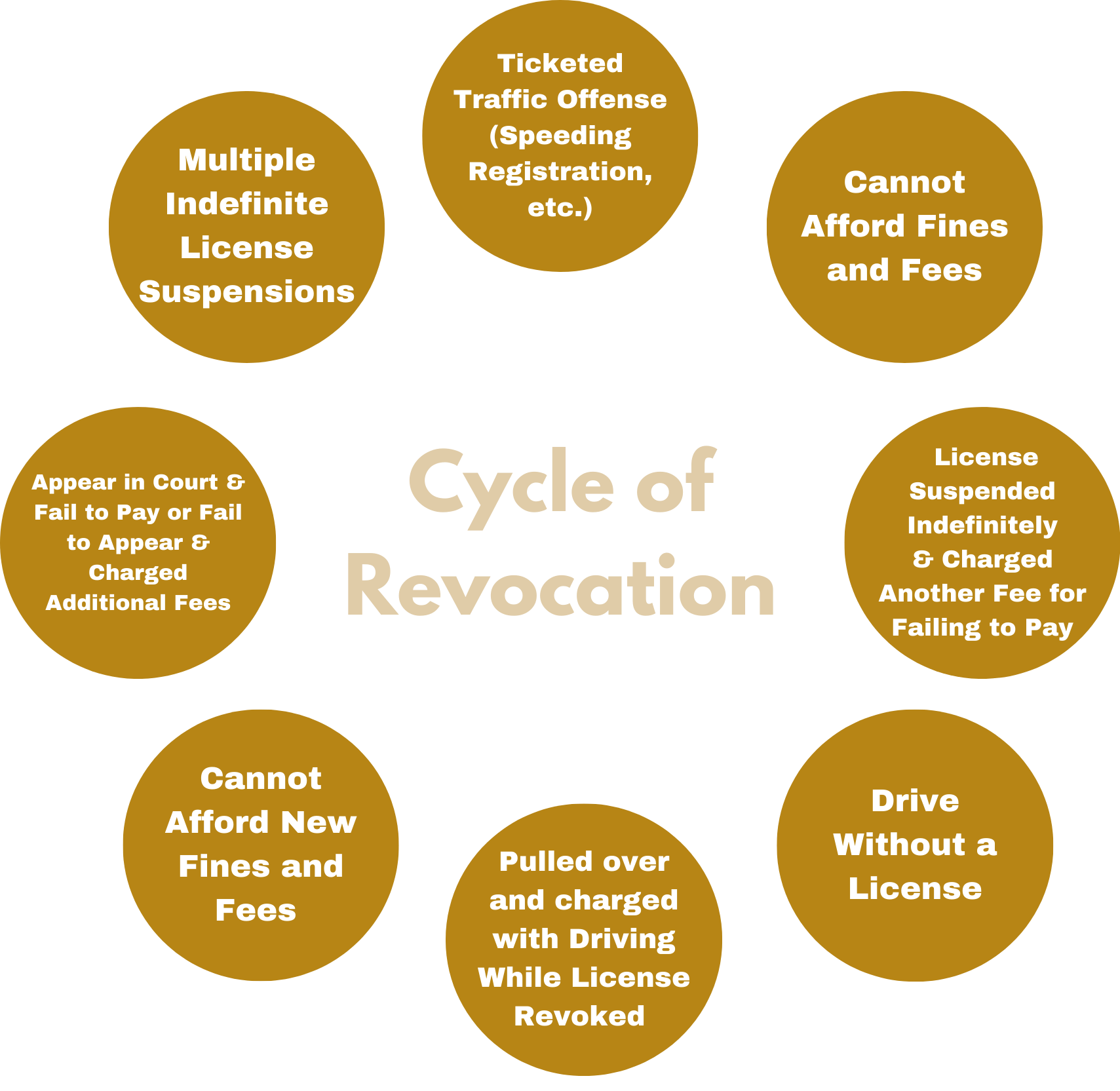
North Carolina law requires the NC Division of Motor Vehicles (DMV) to suspend a person’s driver’s license if the person is charged with a traffic offense and does not pay or otherwise resolve the traffic ticket or misses a court date. After the time to pay or appear passes, the person’s license becomes suspended automatically and stays suspended until they are able to resolve the matter.
There are nearly one million people with North Carolina suspensions on their driving record for missing a court date or unpaid traffic tickets. Many people with these suspensions, which are not related to driving, face long-term suspensions. Statewide the average length of suspension is 8 years.
The law was initially created to encourage people to appear in court and pay their fees and fines. However, data shows that these policies are ineffective.
Underlying the use of non-driving-related suspension policies is the assumption that an individual is able to pay or appear but has chosen not to. The policies do not take into account the valid reasons that a person can miss a court date, including lack of transportation or forgetting their appointment. They also do not take into account that many people cannot afford to pay their traffic tickets.
Driver's License suspensions worsen the problem, nonpayment and missed court dates, because they negatively affect employment, transportation, and housing. This disproportionately impacts people of color and low-income communities.